Hanging It Out: How Aerial Yoga Decompresses the Spine (and Who Should Be Careful)
The best-selling sensation of aerial yoga is the spine hanging long in the hammock — the gentle traction that a desk-compressed back craves. The decompression guide: the actual science, the beginner-safe sequence and the honest list of who should skip the inversions.
The Decompression Science
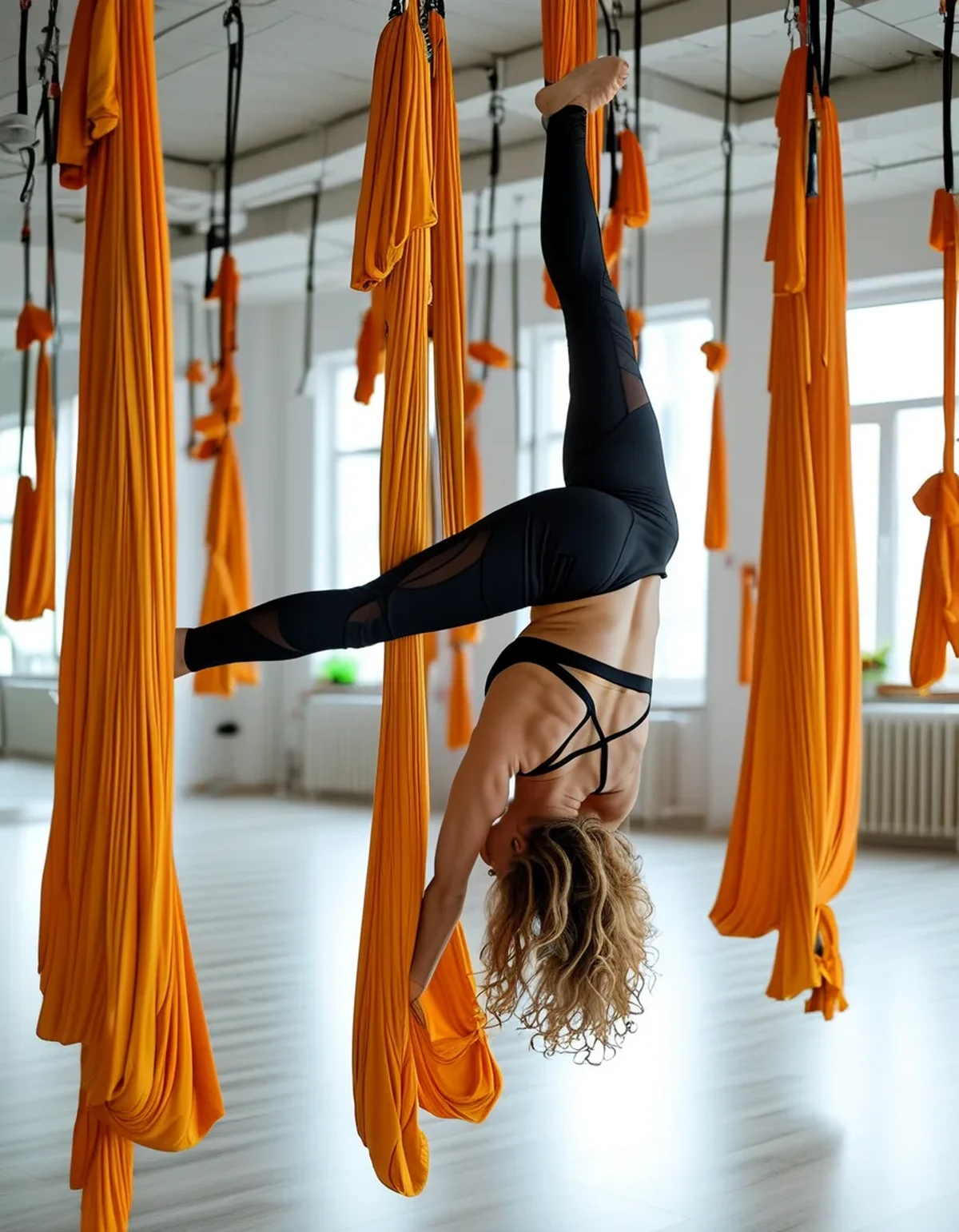
What hanging actually does: the traction mechanism (the gravity-assisted lengthening of the spine when supported inverted or semi-inverted — the discs and joints given space the upright day compresses; the felt relief that keeps aerialists coming back), the desk-back relevance (the seated-hours compression from the posture chapters answered by the opposite input — the decompression as the anti-chair), the fascia-and-mobility layer (the gentle full-body stretch the hammock enables — the supported backbends that floor work can’t replicate as kindly), and the honest framing (the relief is real and often temporary — the aerial session as a wonderful input among the strength-and-posture inputs that address the cause; the both-and from the core-strength chapter).
The Beginner-Safe Sequence
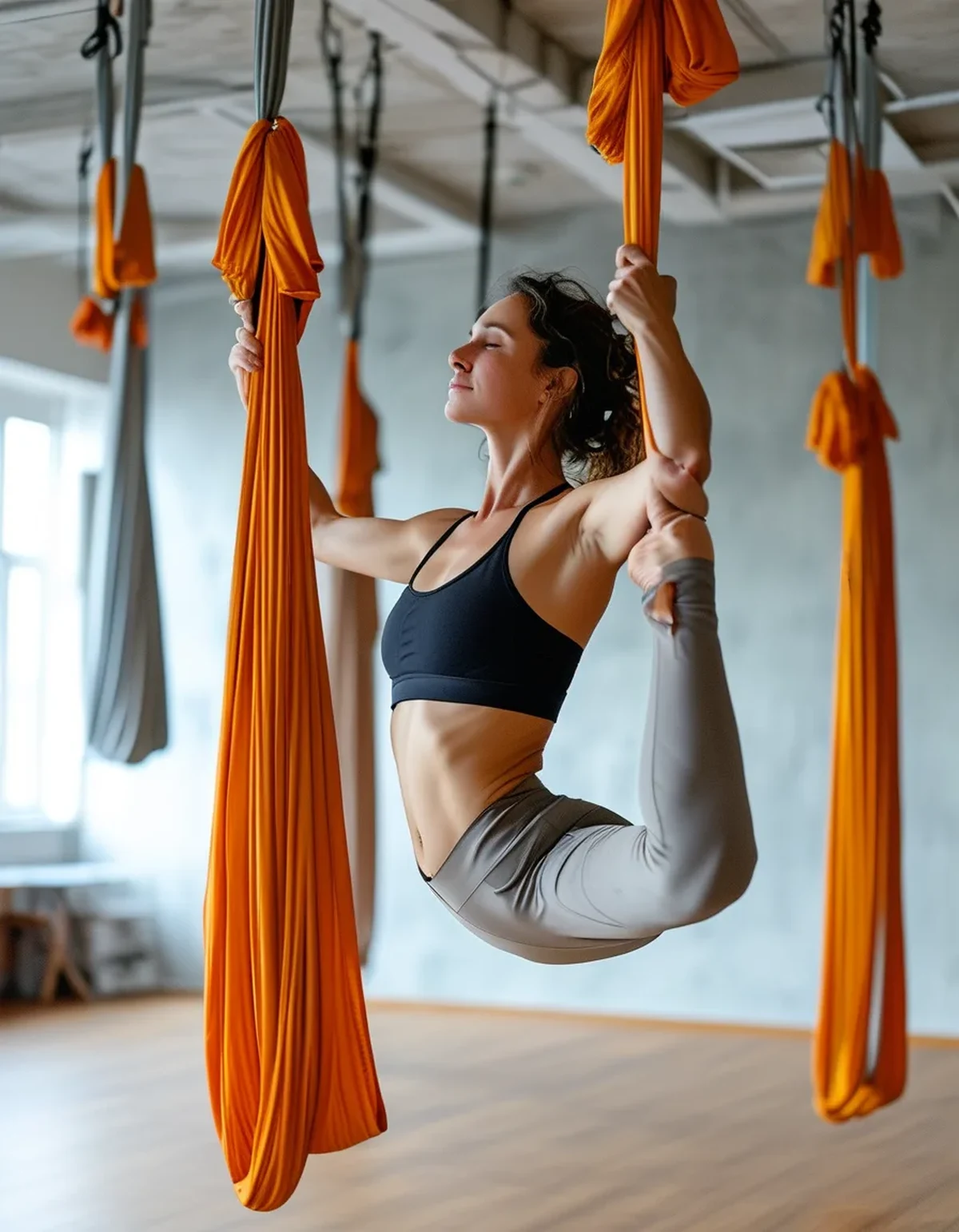
Easing into inversion: the low-and-supported start (the hammock at hip height for seated and standing supported stretches — the inversions earned after comfort, per the first-class-fears chapter), the gentle-hang progression (the supported forward folds and the assisted backbends before any full inversion — the graded exposure), the first inversion (the supported hip-hang with the hammock cradling — the brief, guided introduction; the head-rush honesty and the come-up-slowly rule), the breathing-and-relax cue (the surrender into the support that makes decompression work — the tension-holding that fights the stretch), and the instructor-led rule (the inversions learned WITH a trained teacher and a rigged setup — the never-improvise-the-rigging safety from the aerial fundamentals).
The Contraindication Honesty
Who should be careful or skip: the pressure-sensitive conditions (the high blood pressure, glaucoma and eye conditions where inversions raise concerns — the doctor conversation before hanging upside down; the honest medical gate), the pregnancy note (the inversions and hammock pressure warranting the provider discussion — the modified-or-skip guidance), the recent-injury-or-surgery tier (the spine, shoulder and eye histories that want clearance — the aerial after injury being a cleared-and-guided return), the vertigo-and-inner-ear caution (the dizziness-prone easing in very gently or choosing non-inverted aerial work), and the frame (aerial’s decompression is a genuine gift for many backs and a clear no for some bodies — the know-your-contraindications wisdom; the trial with a good instructor who asks the health questions first). Hang supported, invert slowly, clear it medically: the spine, lengthened safely.
Aerial yoga’s hammock gives the spine real gravity-assisted traction a desk-bound back craves — ease into inversions with a trained teacher, and clear it first if you have blood-pressure, eye, or pregnancy concerns.
See It in Motion
Seen here: UPF 50+ Short Sleeve Rashguard Swim Shirt — shop it on bubblelime.com
Keep Reading
This article is for general informational and styling purposes only. Fit, sizing, and product availability may vary.