Aerial Yoga for Beginners: What Happens When Yoga Leaves the Floor
Aerial yoga looks like something between a circus audition and a nap in a silk cocoon — which is precisely why most women watch it longingly for a year before trying it. Here is what the hammock is hiding: one of the most beginner-friendly, joint-gentle, core-demanding practices in the studio world, where the fabric functions less as a stunt prop than as the most supportive yoga assistant ever engineered. First-class nerves, benefits, myths and what the inversion actually feels like — the complete beginner briefing.
What Aerial Yoga Actually Is (Prop, Not Performance)
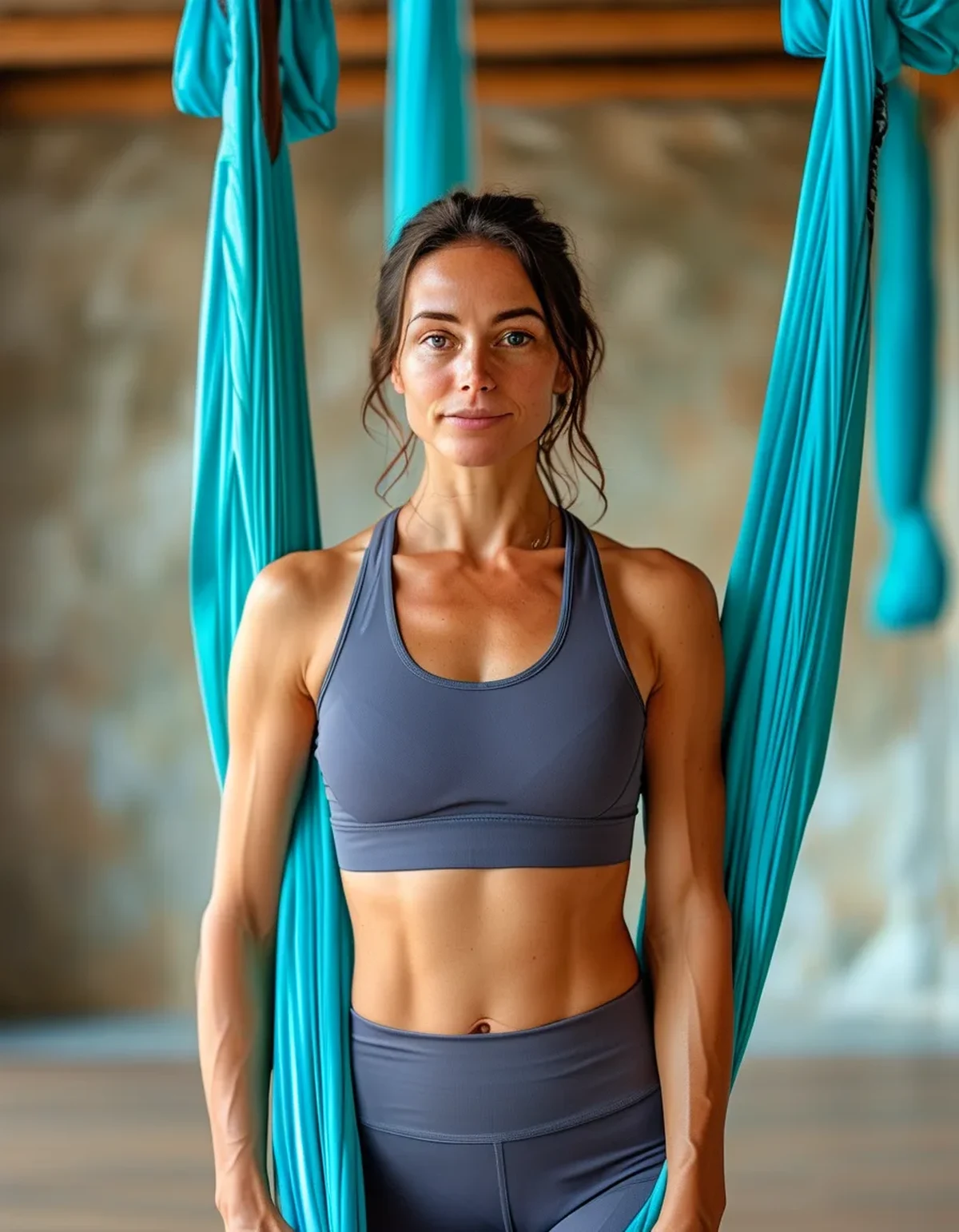
The demystification: aerial yoga runs familiar yoga movement through a fabric hammock rigged to hold many times your body weight (rigging standards run to four-digit pound capacities — the fabric is the strongest thing in the room), and in beginner classes the hammock is a support tool, not a trapeze: it assists balance poses, deepens stretches safely, takes weight out of wrists and knees, and — the headline act — enables inversions with zero neck or spine compression (hanging hip-cradled and upside down without any of headstand’s structural gamble). The circus-adjacent flying comes later, optionally. Class one is yoga with the world’s most accommodating prop.
The Benefits Case (What the Hammock Uniquely Offers)
Aerial’s genuine differentiators: decompression inversions (traction for the spine that floor yoga cannot replicate — the hanging release many students describe as the whole ticket price; early research and physiotherapy interest in spinal traction agrees there is something there), stealth core training (every hammock wobble recruits stabilizers — aerial students develop notable core strength while believing they were playing), accessible versions of hard poses (the hammock scaffolds balance postures and deep backbends years before floor practice would permit them — a confidence pipeline), circulation and lymph-friendly positioning (legs-up variations, elevated), and the psychology no one prices in: play — adult movement so rarely includes swinging that the hammock’s mood effect borders on pharmaceutical. Plus the savasana: cocooned in fabric, gently swaying. Students have been known to require waking.

First Class Briefing (Nerves, Logistics, the Spinning Question)
The practical onboarding: wear fitted layers covering backs of knees and armpits (the fabric grips skin — leggings and a snug sleeved top are the uniform; the loose tank will relocate upside down, as every beginner discovers once), skip lotions (slippery hands and silk disagree), remove rings and dangly jewelry (fabric snags), and eat light hours before (inversions and full stomachs negotiate poorly). Expect in class one: hammock-height adjustment, foundational supported poses, one gentle inversion with full spotting, and forearm-and-hand fatigue before anything else tires (grip is aerial’s first adaptation — it arrives within weeks). The motion-sensitivity note: gentle swinging affects some inner ears — instructors calm the hammock on request, and adaptation is fast. The fear note: the fabric has you. Everyone believes this at minute forty, none at minute one. Both are on schedule.
The Myths Retired (Strength, Weight, Age, Grace)
The gatekeeping beliefs, dismissed in order: I need upper-body strength first (beginner aerial requires none — the hammock supports, the strength develops in-practice; the same backwards logic that haunts climbing and pull-ups), I am too heavy (rigging capacities exceed any student; studios publish limits and they are high — the fabric is not the variable that matters, the accommodating instructor is, and the aerial community skews notably body-positive), too old (studios run silver aerial programs; the decompression benefits arguably rise with age — clearance for anyone with blood pressure, glaucoma or vertigo conditions is the actual gate, and it is a doctor conversation, not an age one), and too clumsy (the hammock is a balance aid — aerial is easier for the wobbly than mat yoga, which offers no handrail; grace is the output of the practice, never the entry fee). The only real prerequisite was always curiosity plus a booked intro class.
Where It Leads (the Aerial Ladder)
The progression for the hooked: foundations classes (supported poses, basic inversions, the vocabulary), aerial flow (linking movement, the dance emerging), tricks-and-drops tiers (the Instagram material — wrapped, controlled falls that are pure technique on a safety-checked apparatus; further than most students need to go, delightful for those who do), the sibling arts (aerial silks — the vertical-fabric climbing discipline aerial yoga is the gateway to — plus hoop and trapeze at circus-arts studios), and the home-rig question answered responsibly: ceiling-mounted hammocks demand structural anchoring and professional judgment — the studio’s engineered rigging is part of what the class fee purchases. Most students, notably, never chase the circus tier at all: the weekly decompress-swing-and-cocoon class becomes its own complete destination — yoga’s most literal version of unwinding, held four feet off the floor. The hammock, it turns out, was never the obstacle. It was the offer.
Aerial yoga, debriefed: a strength-optional, joint-gentle practice where the fabric does the supporting and your core quietly does the growing — spinal decompression, stealth strength, certified play, and the best savasana in the yoga world. The intro class requires leggings, a sleeved top and the willingness to trust engineering. Book it this week. The upside-down version of you has been waiting, and she has excellent posture.
See It in Motion
Seen here: High Waist 8” Yoga Shorts — shop similar styles on bubblelime.com
Keep Reading
This article is for general informational and styling purposes only. Fit, sizing, and product availability may vary.