Aerial Bruises: Normal Rite of Passage or Sign Something's Wrong?
Quick Answer: Light, symmetrical bruising on the inner arms, knees, and hip creases from grip points is normal and usually fades within a week. Deep, one-sided, or joint-area bruising that doesn’t fade or gets worse is a technique or overtraining flag worth addressing.
Your arms look like a Jackson Pollock painting after every aerial class, and you’re not sure if that’s just the sport or a sign you’re doing something wrong. Both answers are common — here’s how to tell which one applies to you.

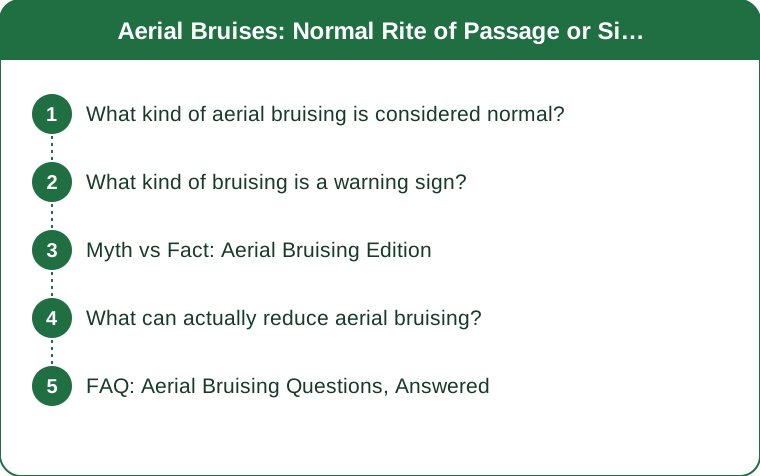
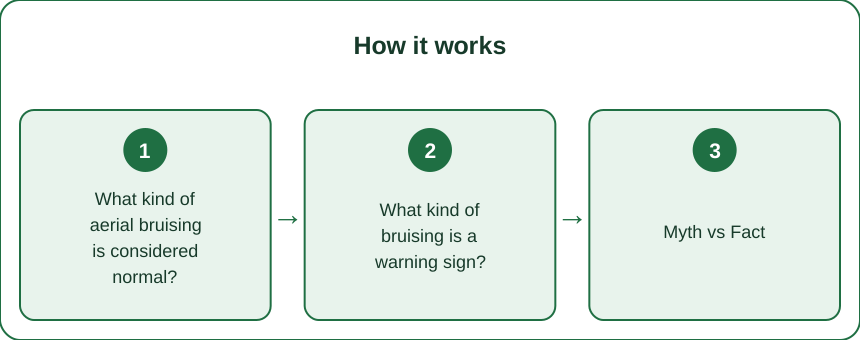
What kind of aerial bruising is considered normal?
Light bruising in predictable spots — inner elbow creases, behind the knees, hip bones, and instep — is extremely common, especially in the first 3-6 months as skin toughens and technique refines. These bruises are usually pale, spread evenly on both sides, and fade within 5-7 days.
What kind of bruising is a warning sign?
Deep purple or black bruising, bruising concentrated on one side only, bruising directly over a joint, or bruises that don’t fade after 10-14 days are worth paying attention to. This pattern often points to weight distributed wrong on the apparatus, gripping with the wrong muscle group, or simply more repetitions than your tissue is currently ready for.

Myth vs Fact: Aerial Bruising Edition
Myth: More bruising means you’re training harder and progressing faster. Fact: Bruising is a sign of impact and friction, not skill or strength gain — a technically clean climb often bruises less, not more, than a struggling one.
Myth: You should push through and the bruises stop mattering. Fact: Skin does toughen over months, but pushing through worsening one-sided bruising usually means reinforcing a technique flaw, not toughening up.
Myth: Bruising is just part of aerial and can’t be reduced. Fact: Padding at key contact points, correcting wrap technique, and building grip strength gradually all measurably reduce bruising frequency.
What can actually reduce aerial bruising?
- Padded grips or arm sleeves at your worst contact points during the learning phase
- Slower drilling of new wraps so weight distributes correctly before adding repetitions
- Building baseline grip and core strength off the apparatus, so less weight transfers through soft tissue
- Rotating which move you drill each session instead of hammering the same wrap 20 times in a row
FAQ: Aerial Bruising Questions, Answered
Is it normal to bruise every single aerial class?
For beginners and intermediate students learning new wraps, yes — this typically decreases significantly after the first 6 months as technique improves.
Should I keep training on top of existing bruises?
Light training on old, fading bruises is generally fine; training directly on fresh, painful bruising usually just adds more damage to the same tissue. Modify the move or skip that specific wrap for a session.
When should aerial bruising see a doctor?
If bruising is accompanied by swelling that doesn’t go down, numbness, or bruises appearing without a clear cause even outside of class, that’s outside normal aerial bruising and worth a medical check. This is general information, not medical advice.
TL;DR:
- Light, even, fast-fading bruising on typical contact points is normal
- Deep, one-sided, joint-area, or slow-fading bruising is a technique flag
- More bruising does not equal more progress
- Padding, slower drilling, and off-apparatus strength all reduce it
Bruises are part of the sport, but they should be getting smaller over time, not bigger. This is general information, not medical advice.
See It in Motion
Seen here: Bootcut Yoga Pants with Side Pockets — shop it on bubblelime.com
Keep Reading
This article is for general informational and styling purposes only. Fit, sizing, and product availability may vary.