Aerial Silks Wrist Pain: Grip Problem or Wrap Technique?
Quick Answer: Wrist pain during silks usually traces to either a death grip (over-gripping to compensate for insecure footlocks) or a wrap that’s putting body weight through a bent wrist instead of a neutral one — check wrap alignment first.
A lot of aerialists assume wrist pain just comes with the sport. Often it’s a fixable habit, not an inevitability.

Is wrist pain from silks always a grip problem?
Not always — it’s roughly split between grip habits and wrap mechanics, and the fix is different for each, so figuring out which one you’re dealing with matters before you change anything.
Grip-related pain tends to show up in the forearm and the base of the thumb. Wrap-related pain shows up more in the wrist joint itself, especially during weight transfer.
What’s a ‘death grip’ and why does it happen?
It’s over-gripping the fabric with your hands to compensate for footlock or bodylock insecurity — your body is trying to create safety through the hands because the lower-body lock isn’t fully trusted yet.
The fix isn’t ‘grip less’ as advice alone — it’s building trust in the lock below so the hands can actually relax.
How does wrap technique cause wrist pain specifically?
If your wrist is bent at an angle when weight transfers into a wrap (rather than staying in a more neutral position), that bent-wrist loading is a mechanical stress the joint isn’t built to absorb repeatedly.
A neutral, straighter wrist position during weight-bearing moments distributes load through the forearm bones instead of concentrating it at the joint.
5 Mistakes That Make Aerial Wrist Pain Worse
- Skipping wrist mobility warm-ups because the focus goes straight to shoulders and core.
- Training through sharp pain instead of stopping to check form.
- Not building forearm and grip strength outside of class, so the joint takes load the muscles should absorb.
- Ignoring asymmetry — favoring one side’s wrap technique without noticing.
- Using tape or grip aids to mask pain instead of addressing the underlying mechanics.
What strengthening actually helps here?
Wrist curls, reverse wrist curls, and farmer’s carries build the forearm strength that takes load off the joint itself during wraps and grip-heavy moves.
Dead hangs from a bar, built up gradually, also transfer well — they train the same grip endurance silks demand, in a lower-risk setting.
FAQ: Aerial Wrist Pain Questions, Answered
Should I keep training through mild wrist soreness?
Mild muscular fatigue, yes with caution. Sharp or joint-specific pain, no — that’s a stop-and-assess signal, not a push-through one.
Does tape actually help wrist pain?
Tape can provide proprioceptive support during recovery but shouldn’t be a long-term substitute for fixing grip or wrap mechanics.
How long does it take to fix a bad wrap habit?
Most aerialists notice a difference within a few weeks of deliberate practice, though it varies with how long the habit has been reinforced.
TL;DR:
- Wrist pain in silks splits between grip habits and wrap mechanics — identify which first
- Death grip usually means the lock below isn’t fully trusted yet
- Neutral wrist positioning during weight transfer reduces joint stress
- Forearm strengthening (wrist curls, dead hangs) genuinely helps prevent recurrence
This is general information, not medical advice — persistent joint pain deserves a proper evaluation.
See It in Motion
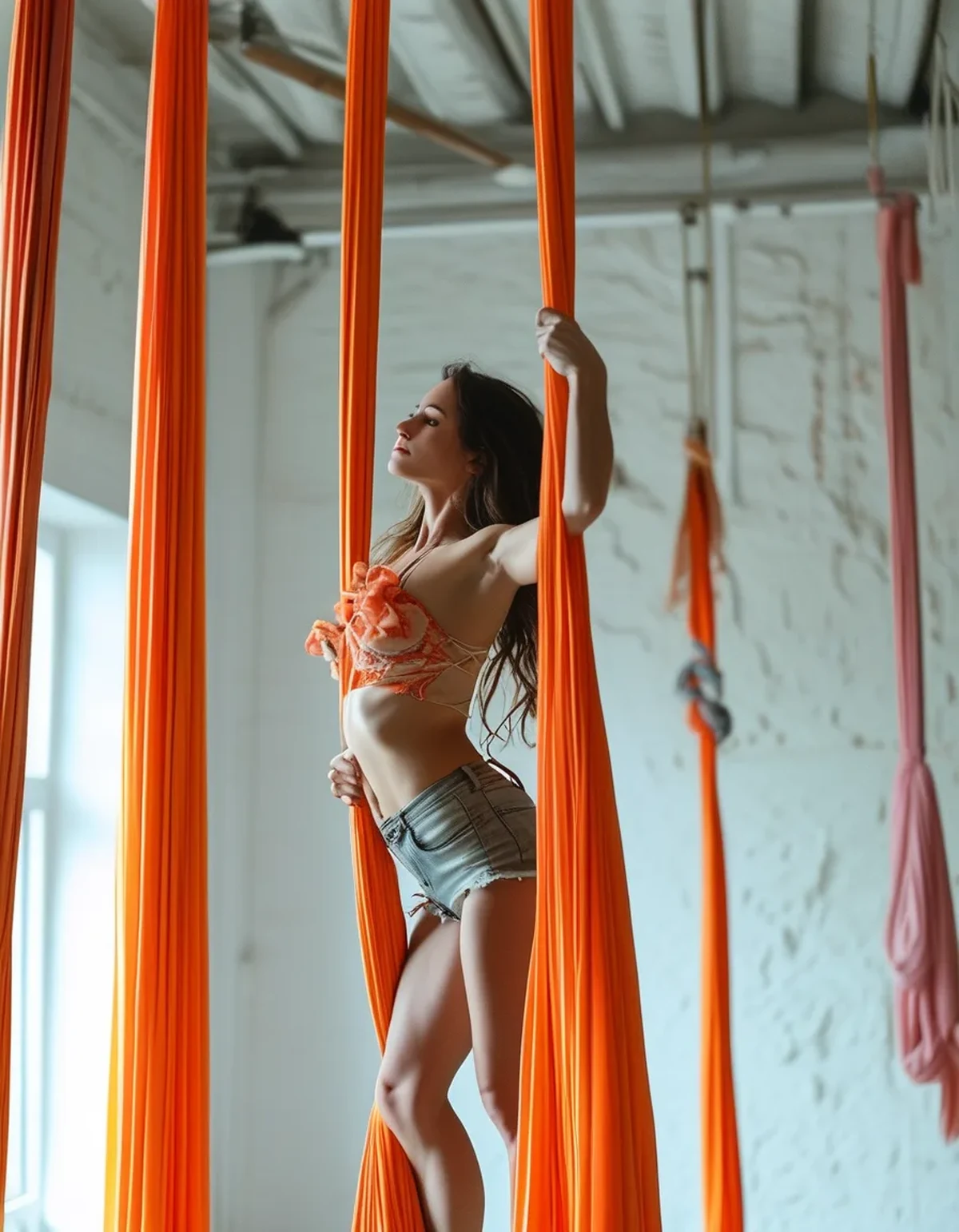
Seen here: UPF 50+ Racerback Yoga Tank Top — shop it on bubblelime.com
Keep Reading
This article is for general informational and styling purposes only. Fit, sizing, and product availability may vary.