How Much Bruising Is Normal in Aerial Silks? A Realistic Guide
Quick Answer: Bruising on the inner thighs, hips, and feet during your first 4-8 weeks of aerial silks is extremely common and considered a normal part of the learning curve as your body adapts to fabric contact points — it typically reduces significantly as technique improves and skin/tissue adapts.
You finish your third class and your legs look like you lost a fight. Almost every aerial beginner goes through this exact phase, and almost every instructor expects it and will tell you so if you ask.

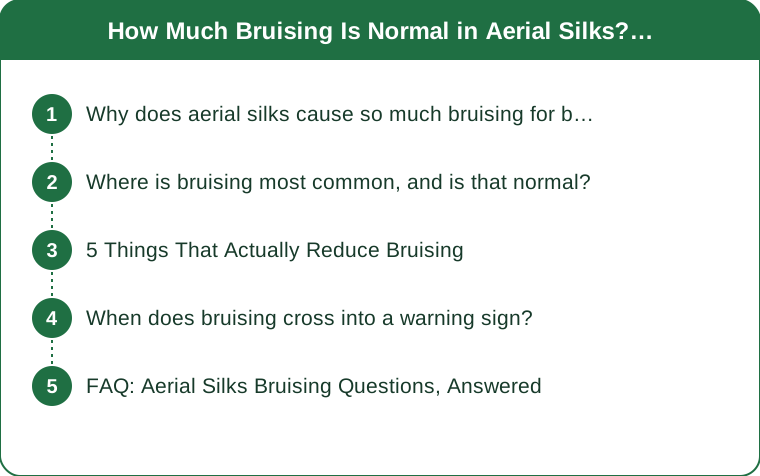
Why does aerial silks cause so much bruising for beginners?
Because early technique relies more on grip strength and brute holding than efficient wrapping, which means more direct pressure and friction against skin at contact points — inner thighs, backs of knees, hips, and feet especially.
As technique improves, weight distributes across the fabric wraps more efficiently instead of concentrating at pressure points, and bruising frequency drops substantially — most regular aerialists report it becoming rare after the first couple of months.
Where is bruising most common, and is that normal?
Inner thighs and hip creases: extremely common, from thigh-based wraps and climbs — this is the most frequently reported spot among beginners. Backs of knees: common with certain wrap types that hook there. Tops of feet: common from foot locks, especially before feet toughen up. Forearms: less common but happens with certain grip-heavy moves.
All of these locations bruising during the early weeks is broadly considered typical — it’s the pattern instructors see across nearly all new students.

5 Things That Actually Reduce Bruising
1. Longer sleeves and leggings for early classes, even in warm studios — a thin fabric layer meaningfully reduces direct friction against skin.
2. Building grip and core strength off the silks through conditioning — the less you rely on raw pressure to hold a wrap, the less concentrated force lands on any one spot.
3. Asking your instructor to check your wrap technique specifically — inefficient wraps concentrate pressure; correct ones distribute it.
4. Spacing out sessions early on rather than training daily — this gives bruised tissue time to recover before the next class.
5. Arnica gel or cream after class, which some aerialists use anecdotally to reduce bruise severity, though evidence for this specific use is limited.
When does bruising cross into a warning sign?
Get it checked if you notice:
- Bruising that’s spreading beyond typical contact points or getting worse rather than better over weeks
- Swelling alongside the bruise, not just discoloration
- Bruises that take significantly longer than 2 weeks to fade
- Any bruise paired with sharp joint pain, not just tissue soreness
Those patterns suggest something beyond normal adaptation and deserve a professional look rather than being written off as ‘just aerial bruising.’ This is general information, not medical advice.
FAQ: Aerial Silks Bruising Questions, Answered
How long until aerial silks stop causing bruises?
Most regular students report a significant drop by 6-8 weeks of consistent practice, as technique improves and skin adapts — it rarely disappears completely but becomes far less frequent.
Should I train through visible bruising?
Mild bruising is generally fine to train around; avoid direct, repeated pressure on the same already-bruised spot until it’s faded to reduce cumulative tissue stress.
Do experienced aerialists still bruise?
Occasionally, especially when learning new skills or wraps, but nowhere near beginner frequency — efficient technique is the main factor that reduces it long-term.
TL;DR:
- Bruising on thighs, hips, knees, and feet is a normal, widely-reported part of the first 4-8 weeks
- It reduces significantly as wrap technique improves and skin/tissue adapts
- Longer sleeves/leggings and better wrap technique both meaningfully reduce it
- Spreading bruises, swelling, or slow healing beyond 2 weeks deserve a professional check
This is a documented, expected part of the learning curve — mention it to your instructor and they’ll likely nod knowingly. This is general information, not medical advice.
See It in Motion
Seen here: Super High Waist Embossed Yoga Leggings with Inner Pocket — shop it on bubblelime.com
Keep Reading
This article is for general informational and styling purposes only. Fit, sizing, and product availability may vary.