Why Your Grip Gives Out Before Your Arms Do in Aerial
Quick Answer: Grip usually fails first because it is doing work your shoulders and lats should be doing. The forearm flexors are small, fatigue quickly, and get recruited as a compensation whenever your shoulder position is poor or you hang passively. Fixing shoulder engagement and hanging position buys more grip endurance than any grip trainer will.
You can do the shape. Your arms feel fine. And thirty seconds in, your hands simply stop cooperating. That’s rarely a hand problem.

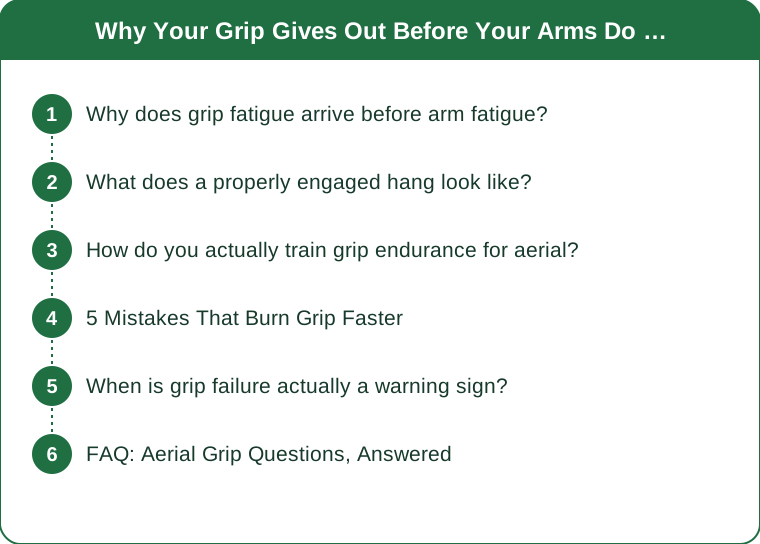
Why does grip fatigue arrive before arm fatigue?
Because the forearm flexors are small muscles carrying a load designed for much larger ones.
When you hang correctly, most of your body weight is managed by the lats, the shoulder girdle, and the rotator cuff, with the hands acting as a hook. When shoulder engagement is missing, you hang from the joint structure and your hands take up the slack - and a small muscle group holding a large load fatigues on a very short timeline.
There’s a second factor: grip endurance is isometric. A sustained hold restricts blood flow to the working muscle, which means metabolic byproducts accumulate faster than they clear. That’s why grip failure feels sudden rather than gradual - you go from fine to unable within a few seconds.
The practical implication is that grip training in isolation solves only part of the problem. If you add hangs without fixing shoulder engagement, you get a slightly stronger compensation rather than a better position.
What does a properly engaged hang look like?
Three checkpoints, all findable on the ground before you leave it.
Shoulders down and back, not up at the ears. A passive hang lets the shoulders ride up toward the head. An active hang pulls the shoulder blades down and slightly together, which loads the lats. The difference in how long you can hold is often dramatic - many people double their hang time from this cue alone.
Slight elbow softness. Fully locked elbows shift load into the joint and encourage passive hanging. A few degrees of bend keeps musculature involved.
Ribs down, core engaged. A ribcage that flares forward disconnects the lats from the trunk. Think of gently drawing the front ribs toward the hips.
Test it standing under a low bar: grip, then without lifting your feet, pull your shoulder blades down. You should feel your armpit area switch on. That switch is what your hands have been substituting for.
How do you actually train grip endurance for aerial?
Specifically, and in smaller doses than most people assume.
Active dead hangs, not passive. Three to five sets of 20-40 seconds, shoulders engaged the entire time, two or three days a week. Drop off before form collapses - hanging past the point where shoulders disengage is training the compensation.
Fabric-specific holds matter because grip on silks is a different shape than grip on a bar. If you have access, hold on the apparatus you actually use.
Towel or thick-bar hangs increase the demand without adding time, useful once plain hangs get easy.
Farmer’s carries build grip endurance under load with a completely different fatigue pattern - two sets of 40 metres with a heavy weight in each hand, once or twice a week.
What to avoid: daily grip work to failure. Forearm flexors and the connective tissue at the elbow don’t tolerate high-frequency maximal work well, and lateral or medial elbow pain is a common result. Two to three sessions a week with a day between is the working range.

5 Mistakes That Burn Grip Faster
1. Regripping constantly. Every regrip is a fresh maximal contraction. Sequences with unnecessary hand adjustments cost far more than the same time spent in one stable hold. Plan hand placement before you climb, not during.
2. Gripping harder than the load requires. Most people hold at near-maximum tension regardless of the actual demand, especially when nervous. Consciously grip at about 70% for stable holds and save maximum for genuine load.
3. Skipping chalk or using too much. Sweat reduces friction and forces a harder grip to compensate. Too much chalk, though, creates a slick powder layer. A thin, worked-in layer is what you want.
4. Training grip immediately before aerial class. Pre-fatigued forearms make the class both harder and less safe. Do dedicated grip work after class or on a separate day.
5. Ignoring wrist position. A cocked-back wrist puts the flexors at a mechanical disadvantage and reduces available force. A relatively neutral wrist is stronger and more durable.
When is grip failure actually a warning sign?
Most grip fatigue is normal training fatigue. Some of it isn’t.
Numbness or tingling in specific fingers - especially if it follows a nerve pattern rather than the whole hand - is worth getting looked at rather than trained through. Sustained gripping and hanging can irritate nerves at the elbow and wrist.
Pain on the outside or inside of the elbow that persists between sessions is the most common overuse presentation in grip-heavy training. It responds much better to early load management than to pushing on.
A sudden, disproportionate drop in grip strength on one side only is not a normal training response and deserves professional assessment.
Skin is its own limiter and its own signal. Tears at the base of the fingers mean the hand is sliding under load, which usually points back to grip technique or fabric condition. Manage calluses by filing them flat rather than letting them build into ridges that catch and tear.
This is general information, not medical advice - persistent pain or neurological symptoms need an in-person opinion.
FAQ: Aerial Grip Questions, Answered
How long should I be able to hang?
There’s no universal standard, but a controlled 45-60 second active hang is a reasonable working target for intermediate aerial students, with shoulders engaged the whole time.
Do grip trainers and hand grippers help?
Marginally. They train crushing strength, while aerial demands sustained support strength. Hangs and carries transfer better.
Why is my grip worse some days?
Sleep, hydration, prior training, and how much typing or lifting you did that day all show up in grip. It’s one of the more sensitive markers of general fatigue.
Should I use grip aids or tape?
Tape can protect skin at specific hot spots. Relying on aids to compensate for a position problem tends to delay the fix rather than solve it.
TL;DR:
- Grip fails first because it’s substituting for absent shoulder and lat engagement
- An active hang - shoulders down and back, ribs down, soft elbows - often doubles hold time
- Train with active hangs and farmer’s carries, 2-3 times a week, never to failure daily
- Regripping and over-gripping are the two biggest unnecessary drains
- Numbness, one-sided weakness, or persistent elbow pain need a professional, not more training
Your hands aren’t weak. They’re doing a job that belongs to your back.
See It in Motion
Seen here: Bootcut Capri Yoga Pants with Pockets — shop similar styles on bubblelime.com
Keep Reading
This article is for general informational and styling purposes only. Fit, sizing, and product availability may vary.