The Grip Mistake That's Making Aerial Way Harder Than It Should Be
Quick Answer: Most aerial beginners grip far harder than the move requires, burning out forearms in the first two minutes — learning to grip at roughly 60% effort, engaging the shoulders and lats to share the load, fixes this faster than any amount of forearm training.
Your forearms are screaming by the second climb of class, while the instructor makes the same move look effortless. It’s tempting to think that’s just superior grip strength — but it’s more often a grip technique problem.

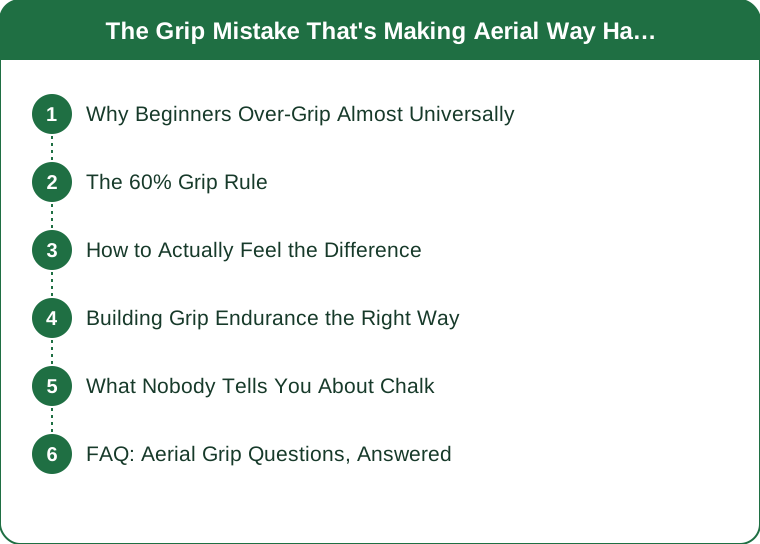
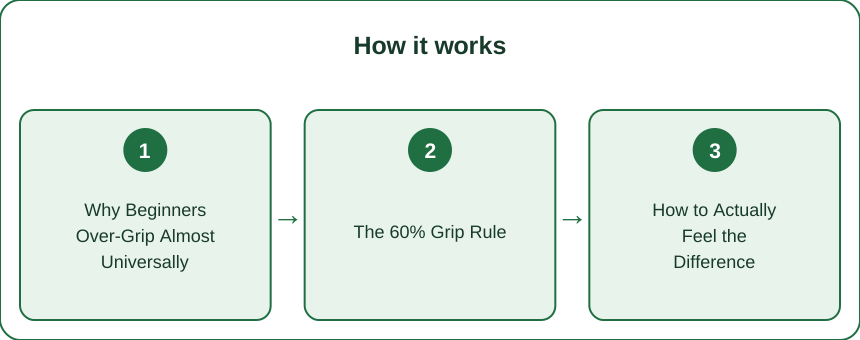
Why Beginners Over-Grip Almost Universally
When you’re unsure of a movement, the nervous system’s default safety response is to grip harder, because a tighter grip feels more secure even when it isn’t actually more effective. This is instinctive, not a conscious choice, which is why simply telling yourself to relax your grip rarely works on its own.
The 60% Grip Rule
Most climbs and wraps only need about 60% of your maximum grip force — the rest of the hold should come from shoulder and lat engagement, pulling the fabric or apparatus toward your body rather than just squeezing it. Try consciously softening your grip by a third on your next easy climb; if you don’t fall (and you won’t), that’s proof you were over-gripping.
How to Actually Feel the Difference
On the ground, hang from a pull-up bar and notice how your shoulders engage to take weight off your hands. That same shoulder-engagement feeling is what should be happening on silks or hoop — if your shoulders feel passive while your forearms feel like they’re on fire, the load isn’t distributed correctly yet.

Building Grip Endurance the Right Way
Dead hangs (30-45 seconds, 3 sets) and towel-grip pull-ups build genuine grip endurance, but they only help once the technique of sharing load with shoulders is in place — grip training on top of a bad gripping habit just makes you better at the wrong thing for longer.
What Nobody Tells You About Chalk
Chalk reduces slip, which lets you grip less hard for the same security — but many beginners use chalk and then keep gripping at full force anyway, wasting its main benefit. Use chalk specifically as permission to soften your grip, not just as a sweat fix.
FAQ: Aerial Grip Questions, Answered
How long until grip stops being the limiting factor?
Most consistent students (2x/week) notice grip stops being the main barrier within 6-8 weeks, once shoulder-sharing technique is established.
Should I train grip strength separately outside class?
A little (dead hangs 2x/week) helps, but technique work in class matters more early on — pure grip training can’t fix a load-distribution problem.
Is forearm pump after every class normal?
Some pump is normal for months 1-2, but pain that lingers into the next day or numbness/tingling should be checked by a professional, not trained through.
TL;DR:
- Beginners instinctively over-grip out of nervous-system safety response, not weakness
- Aim for ~60% grip effort, sharing load through shoulders and lats
- Test it: softening grip on an easy climb won’t make you fall
- Chalk should let you grip less, not just sweat less
Before assuming you need stronger forearms, check whether your shoulders are actually doing their share of the work — most aerial exhaustion is a distribution problem, not a strength ceiling.
See It in Motion
Seen here: Super High Waist Embossed Yoga Leggings with Inner Pocket — shop it on bubblelime.com
Keep Reading
This article is for general informational and styling purposes only. Fit, sizing, and product availability may vary.