Your Grip Is Ending Your Aerial Sessions Before Your Shoulders Do
Quick Answer: Grip fails first in aerial because sustained holding is an endurance quality trained by time under tension, while most people train pulling strength through reps. Add two or three short dead-hang sessions a week, accumulating 90 to 180 seconds of total hang time, progress by adding seconds rather than reps, and manage skin actively - file calluses flat, keep hands moisturized on rest days, and stop before a callus tears rather than after. Skin failure sidelines more aerialists than muscle failure does.
You have the shoulder strength for the sequence. You have done the conditioning. And you still come down after 40 seconds because your hands opened, which feels like the least interesting possible reason to stop.

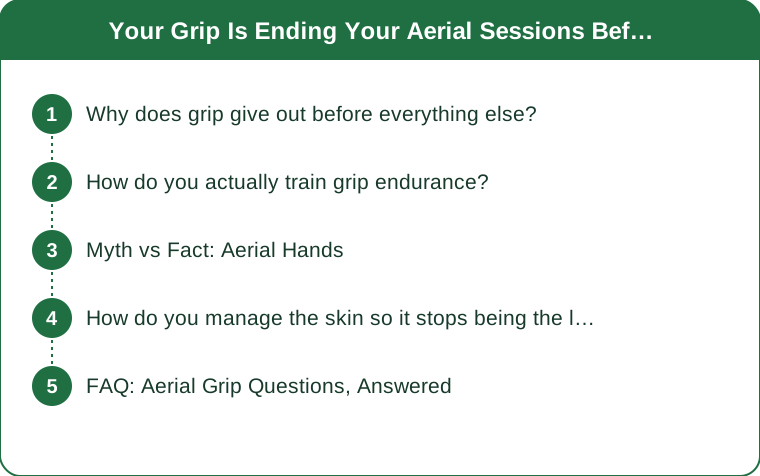
Why does grip give out before everything else?
Because you are asking it for endurance and training it for strength. The forearm flexors that close your hand are working isometrically for the entire time you are on the apparatus. That is a fundamentally different demand from a set of ten pull-ups, and it adapts to a different stimulus: time, not repetitions.
Isometric holds restrict blood flow. A sustained maximal grip compresses the small vessels running through the working muscle, so the forearm accumulates metabolites faster than it clears them. This is why the burn escalates so sharply and why a 20-second rest restores far more capacity than it seems it should.
Your grip is also stabilizing, not just holding. On silks or rope the fabric moves, so the hand is constantly making micro-adjustments while under load. That costs more than a static bar hang of the same duration, which is why a dead hang PR does not translate cleanly to apparatus time.
And forearm size does not predict endurance. Grip endurance is heavily neural and metabolic. Plenty of strong aerialists with well-developed forearms fail early simply because they have never accumulated time under tension.
One more factor people miss: overgripping. Anxiety at height, a new skill, or a slippery day produces a maximal grip where a moderate one would do. That single habit can halve your usable time on the apparatus, and it is often the fastest thing to fix.
How do you actually train grip endurance?
Use dead hangs, and count seconds rather than sets. A workable starting structure is three to five hangs of 20 to 30 seconds with 60 to 90 seconds of rest, two or three times a week, accumulating 90 to 180 seconds of total hang time per session. Progress by adding five seconds to each hang before adding another hang.
Keep it submaximal most of the time. Hanging to absolute failure every session beats up the elbows and the skin without improving endurance faster. Stop each hang with two or three seconds left in the tank on most sets.
Add one specificity session on the apparatus itself. Simple holds in your training position for timed intervals. Fabric grip and bar grip are related but not identical, and the transfer is better when some of the training happens on the thing you actually use.
Train both open and closed hand positions. A bar hang trains a closed grip. Much aerial work uses a wrapped or hooked grip where the thumb is not opposing. Include some hangs on a thicker implement - a towel over the bar works - to cover the range.
Do not neglect the extensors. Everything in aerial trains the flexors, and chronic imbalance at the forearm is a common contributor to lateral elbow pain. Two sets of 15 to 20 reps with a rubber band around the fingertips, opening the hand against resistance, twice a week, is enough to keep it honest.
Expect the adaptation to take six to eight weeks. Grip endurance improves reliably but not quickly, and the first noticeable change is usually that the burn arrives later rather than that it hurts less.

Myth vs Fact: Aerial Hands
Myth: Thick calluses protect your hands. Fact: Raised, thick calluses are exactly what catches on fabric and tears. A tear takes a week or more off the apparatus. Filing calluses flat is protective; letting them build is not.
Myth: You should never moisturize because it softens your grip. Fact: Dry, brittle skin cracks and splits. Moisturize on rest days and in the evening, keep hands dry and chalked for training, and you get durable skin rather than either extreme.
Myth: More chalk always helps. Fact: Chalk manages moisture. Beyond a thin even layer it cakes, reduces contact with the fabric, and can actually make grip less secure. Reapply thinly rather than heavily.
Myth: Grip strength and grip endurance are the same thing. Fact: They correlate loosely and adapt to different stimuli. A high one-rep grip strength with no accumulated time under tension is a common profile in aerialists who fail early.
Myth: If your hands hurt, push through. Fact: Sharp, localized pain at the base of a callus is the specific warning that precedes a tear. That is the moment to stop for the day - a session cut short costs one session; a torn callus costs a week or two.
Myth: Numbness or tingling in the fingers is just fatigue. Fact: Persistent numbness or tingling, particularly in a specific finger pattern, warrants a professional assessment rather than more conditioning.
How do you manage the skin so it stops being the limiter?
File after training, not before. Once a week or so, use a pumice stone or callus file on damp skin after a shower to bring raised calluses level with the surrounding surface. The aim is smooth, not thin - removing too much leaves the skin underneath vulnerable.
Moisturize at night on rest days. A plain, non-greasy hand cream is enough. Hands that are neither cracked nor soggy are the goal, and the timing matters more than the product.
Tape or wear grips for high-volume days. If a session is long or repetitive on one wrap, protect preemptively. Deciding to tape after the skin is already hot is usually about 20 minutes too late.
Respect a tear properly if you get one. Trim the loose flap, keep it clean and covered, and stay off the apparatus until it has closed. Training through a tear on fabric is both painful and a genuine infection risk given how much shared equipment is involved.
Watch the elbows as the second limiter. Once grip endurance improves, load moves up the chain, and lateral elbow pain is common in aerialists who add hang volume quickly. Increase total weekly hang time by no more than about 10 to 20 percent per week.
And check your overgripping honestly. On a familiar, low-height hold, deliberately relax your grip until you feel the minimum required, then note how different that is from your default. Most people are gripping considerably harder than the skill requires, and this costs nothing to fix.
Persistent joint pain, numbness, or tingling should be assessed by a healthcare professional. This is general information, not medical advice.
FAQ: Aerial Grip Questions, Answered
How do I stop my hands giving out during aerial?
Train grip as an endurance quality: two or three weekly dead-hang sessions accumulating 90 to 180 seconds of hang time, progressing by adding seconds rather than reps. Expect six to eight weeks before the change is obvious, and fix overgripping at the same time.
Should I file down my aerial calluses?
Yes - raised calluses catch on fabric and tear, which costs a week or more of training. File them level with the surrounding skin on damp skin after a shower, aiming for smooth rather than thin.
Why do my hands hurt more some days than others?
Humidity, hydration, how recently you filed, and how much you overgripped all change day to day. Sharp localized pain at a callus base is a specific pre-tear warning and means stopping for that session.
How often should I train grip for aerial?
Two to three short sessions a week alongside your aerial training is enough, with total weekly hang time increasing by no more than 10 to 20 percent. Include some extensor work to balance the forearm and reduce elbow irritation.
TL;DR:
- Grip fails first because it is doing isometric endurance work while most training programs develop pulling strength through reps.
- Train with dead hangs measured in seconds - 90 to 180 seconds of total hang time, two or three times a week, progressing by adding time.
- Include thick-implement and open-hand variations, and train the extensors to protect the elbows.
- Skin is the other limiter: file calluses flat, moisturize on rest days, chalk thinly, and stop at the first sharp pain rather than after a tear.
- Fix overgripping - most aerialists hold far harder than the skill requires, which alone can halve usable time on the apparatus.
Your lats are not the ceiling. Give your hands the same six to eight weeks of deliberate training you gave your pull-ups, and the sequence you keep coming down from will start finishing itself.
See It in Motion
Seen here: Bootcut Capri Yoga Pants with Pockets — shop similar styles on bubblelime.com
Keep Reading
This article is for general informational and styling purposes only. Fit, sizing, and product availability may vary.