Fabric Burn in Aerial: Conditioning Your Skin Without Just Toughing It Out
Quick Answer: Fabric burn is a friction injury - heat and shear from fabric sliding across skin under your full body weight. Skin genuinely adapts with repeated moderate exposure over four to six weeks, but only if you load it gradually and let it recover between classes. Until then, cover the hot spots with full-length leggings and fitted layers, slow down every slide, and treat broken skin as an injury rather than a rite of passage.
Every aerialist has a spot - backs of the knees, top of the foot, hip crease - that lights up in the same wrap every time. The standard advice is that you will toughen up. True, but incomplete, and the incomplete part is why people quit skills they were strong enough to do.

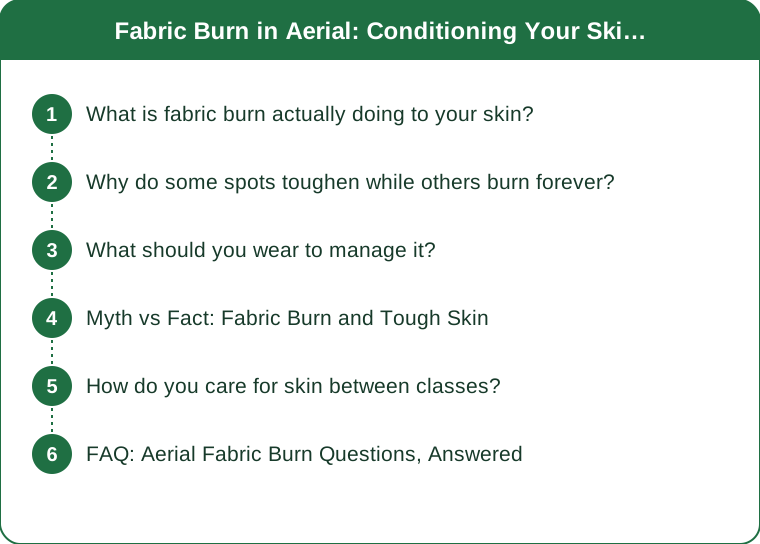
What is fabric burn actually doing to your skin?
It is a friction burn - the same injury as rope burn or a carpet burn, produced by fabric moving across skin under load.
Two components do the damage:
- Heat. Sliding generates real temperature at the contact point, and the faster the slide, the hotter the interface. Drops and fast slides can produce genuine first-degree burns in under a second.
- Shear. Even without a slide, fabric gripping skin and dragging it sideways stresses the upper layers, which is why a static wrap can leave you sore in places nothing visibly slid.
Add pressure - your entire body weight concentrated on a strip of fabric two inches wide - and the backs of the knees, hip creases, waist, armpits, and tops of the feet take doses of friction that skin elsewhere never experiences in ordinary life.
Severity runs a spectrum: redness that fades in an hour, a raw sting that lasts a day, and broken or blistered skin. That last category changes the rules completely - broken skin is an open injury that will not condition, only scar or get infected if you keep loading it. Redness is training stimulus. Broken skin is a forced rest day, and knowing the difference is the entire skill of managing this.
Why do some spots toughen while others burn forever?
Because adaptation follows the same rules as every other tissue: progressive load plus recovery equals adaptation; spikes plus no recovery equal damage.
Skin responds to repeated moderate friction by thickening its outer layer and, over weeks, becoming measurably more resistant - the same process that builds guitar fingertips and barbell calluses. The timeline is roughly four to six weeks of consistent exposure for a noticeable change, faster for thin-skinned areas to sting less, slower for genuine durability.
The spots that never seem to toughen share a pattern:
- They only get loaded occasionally. The skill that appears once a month delivers a spike each time and never enough frequency to adapt.
- They get re-burned before healing. Skin mid-repair is more fragile than baseline, so twice-weekly damage to the same spot ratchets downward, not upward.
- They sit where skin is thinnest and moves most. The backs of the knees fold with every step, so healing there is slow and adaptation slower. This spot deserves covering basically forever.
The practical rule that falls out: when a new wrap introduces a new contact point, feed it small doses - a few reps, stop while it is only pink, repeat within a few days. That schedule conditions. The alternative - one heroic session to raw skin, then two weeks off - is how people stay permanently un-toughened at the same spot for years.
What should you wear to manage it?
Coverage is legitimate, permanent equipment, not a beginner crutch - professionals cover strategically their whole careers.
Full-length leggings are the foundation. For silks and hammock, leggings that actually reach the ankle and stay there protect the calves and backs of knees, the two most burned zones. Fit matters more than brand: snug through the calf with no loose fabric, because baggy material bunches inside wraps and creates its own pressure ridges. High-waisted styles keep the hip crease and lower back covered through inversions - nothing derails a class like a waistband that abandons its post mid-crossback.
Fabric choice is a grip decision too. Slick, shiny finishes slide in wraps - which reduces burn and also reduces security, a bad trade past a point. Matte cotton-blend or brushed finishes grip better; ultra-soft buttery-soft leggings feel wonderful but check that the finish is not glassy before trusting a hip key to them. Many aerialists keep one grippier matte pair specifically for slide-heavy skills.
Layer the hot spots. Thin knee-high socks or footless tights under leggings double-cover the knee crease; a fitted long-sleeve top protects armpits and waist for belays and crossbacks. Fitted is the rule everywhere - anything loose migrates.
Skip lotion before class. Moisturized skin is softer and more slide-prone, and product transfers onto the fabric everyone shares. Moisturize after, never in the hour before.

Myth vs Fact: Fabric Burn and Tough Skin
Myth: Real aerialists train skin-out and take the burn. Fact: Watch a professional class - leggings, sleeves, and strategic socks everywhere. Skin-out is a choice for specific grip needs, not a toughness credential. Nobody’s career was built on the backs of their knees being leathery.
Myth: Burn is just part of learning drops. Fact: A drop that burns badly every time is usually being taken too fast or with a loose wrap that travels. Cleaner technique - slower feed, tighter wrap placement - cuts friction dramatically. Burn is feedback, and the answer to feedback is adjustment, not endurance.
Myth: Once conditioned, always conditioned. Fact: Skin adaptation reverses in a few weeks off, which is why the first class back from vacation bites. Return at reduced volume for the first week and the re-adaptation is quick; return at full volume and you start the damage cycle instead.
Myth: Calluses and rough skin should be filed completely smooth. Fact: That thickening is the adaptation you trained for. File only edges and snag-prone ridges; stripping the pad returns the spot to beginner skin.
Myth: If it did not leave a mark, nothing happened. Fact: Sub-visible friction still counts toward both adaptation and overload. A spot that stings sharply on hot water that evening got a real dose - factor it into what you load tomorrow.
How do you care for skin between classes?
Treat it like the training tissue it is.
Same evening: rinse sweat off burned areas - salt on friction-stressed skin prolongs the sting - and moisturize normally. For anything raw, cool water, gentle soap, and a plain healing ointment beat every specialty product.
Broken skin protocol: clean it, cover it with a plaster or hydrocolloid, and give that contact point a genuine pause from loading until it has closed - usually several days. Training on open skin in shared fabric is how infections happen, and it converts a three-day pause into a three-week one. Watch for spreading redness, warmth, or pus; those signs mean see a professional. This is general information, not medical advice.
Between classes: moisturize daily - conditioned skin is supple, not dry and cracking - and file any callus edges after showers so they do not snag fabric.
Load management is skin management. When planning a slide-heavy or new-wrap class, do not schedule the same contact points hard again within 48 hours. Alternating skill families across the week - hip-based day, foot-lock day - is periodization for skin, and it is why some people condition steadily while others cycle through burn and recovery forever.
And log your spots. A one-line note - left knee crease pink after double-star, fine by Thursday - turns skin from a mystery into a tracked variable, exactly like sore shoulders or grip fatigue.
FAQ: Aerial Fabric Burn Questions, Answered
How long until my skin stops burning so easily?
Most people feel a clear difference in four to six weeks of consistent, moderate exposure to the same contact points, with real durability by three months. The schedule matters more than the total: small frequent doses condition, occasional heroic ones just injure.
Are grip aids or rosin bad for skin burn?
Grip products increase friction, which improves security and increases burn potential on skin contact points - another argument for covering skin and keeping grip aids for the hands. Follow your studio’s rules; many restrict rosin because it changes the fabric for everyone after you.
Should I pop a friction blister from silks?
Leave it intact if at all possible - the roof is a sterile dressing. Cover it, skip loading that spot until it settles, and if it tears on its own, treat it as broken skin: clean, cover, pause. Repeated blistering at one spot is a technique or pacing signal, not a skin flaw.
Do leggings actually change grip on the fabric?
Yes, meaningfully. Fabric-on-fabric grips differently than fabric-on-skin - usually more securely for wraps, sometimes less for pure skin-grip skills like certain climbs. Test any new leggings on basic skills low over the mat before trusting them in drops, and keep a consistent pair once you find one; grip you can predict is grip you can use.
TL;DR:
- Fabric burn is a friction injury: heat plus shear under body weight, concentrated at knees, hips, waist, and feet
- Skin adapts in four to six weeks - but only to small frequent doses with recovery, never to occasional raw-skin spikes
- Full-length, snug, matte-finish leggings and fitted layers are permanent equipment, not beginner crutches
- Redness is training stimulus; broken skin is an injury that pauses that contact point until closed
- Returning from time off means reduced volume for a week - conditioning reverses and rebuilds fast
The aerialists who seem immune to burn are not tougher. They cover the spots that never adapt, dose the spots that do, and treat skin like the fourth training variable next to strength, flexibility, and grip. Yours will keep up the moment you stop asking it for heroics.
See It in Motion
Seen here: Super High Waist Embossed Yoga Leggings with Inner Pocket — shop it on bubblelime.com
Keep Reading
This article is for general informational and styling purposes only. Fit, sizing, and product availability may vary.