How Many Rest Days Aerial Conditioning Actually Needs (It's Probably More Than You're Taking)
Quick Answer: Grip and shoulder-heavy aerial conditioning generally needs 48-72 hours between intense sessions on the same muscle groups — shorter than that risks connective tissue strain that doesn’t show up as soreness the way muscle fatigue does.
Aerial training doesn’t feel like lifting weights, so it’s easy to assume the usual ‘rest when sore’ rule doesn’t apply. It does — just for different tissue than you’d expect.

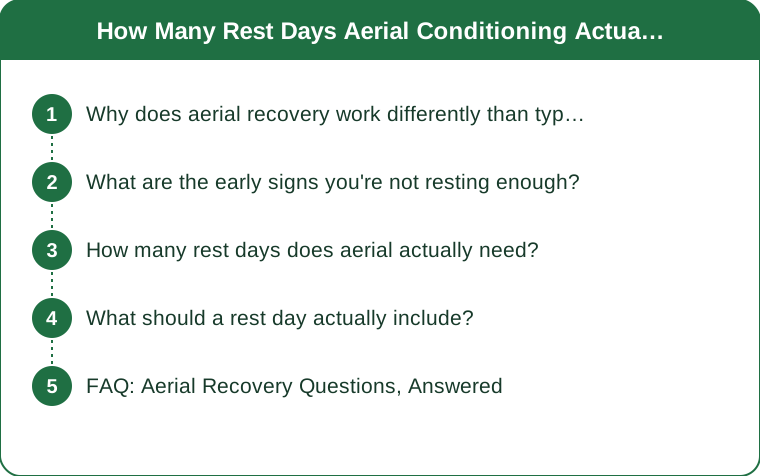
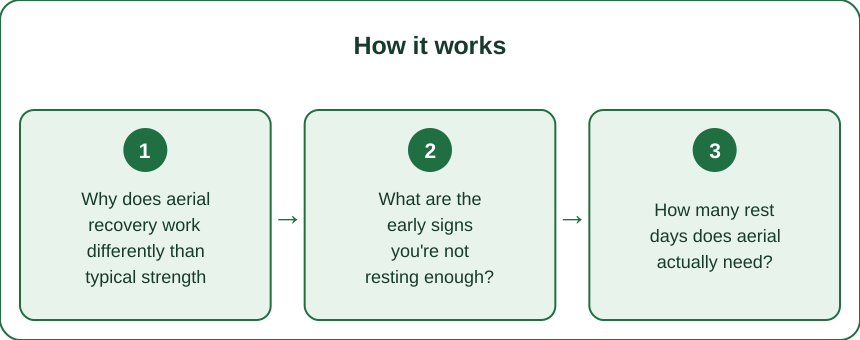
Why does aerial recovery work differently than typical strength training?
Aerial relies heavily on grip strength and connective tissue (tendons, ligaments) rather than pure muscle output. Connective tissue recovers more slowly than muscle and gives far less warning — you can feel ‘fine’ in the muscle while tendons are still accumulating strain.
This is why aerial overuse injuries often show up as a sudden ache rather than gradual, predictable soreness.
What are the early signs you’re not resting enough?
Grip fatiguing faster than usual at the start of a session, before real work has even begun. Persistent forearm or shoulder ache that doesn’t fully settle between classes. Skin conditioning (calluses) feeling raw rather than toughened.
Any of these on their own is worth a rest day; two or more together is worth a longer break, closer to 4-5 days.

How many rest days does aerial actually need?
48-72 hours between sessions that heavily load the same grip and shoulder patterns is a reasonable baseline for most recreational aerialists. Training 4-5 days a week on the same apparatus without any lighter days is where overuse risk climbs fastest.
Cross-training on ‘rest’ days (light mobility work, walking) is fine — the goal is avoiding repeated heavy grip loading, not total inactivity.
What should a rest day actually include?
Gentle wrist and forearm mobility, light stretching, and skin care for calluses if you use them. Avoid any hanging or heavy grip work entirely, even ‘just a little.’
Sleep quality matters more here than in many other sports, since connective tissue repair leans heavily on deep sleep phases.
FAQ: Aerial Recovery Questions, Answered
Is it normal for forearms to stay sore for 2+ days after aerial?
Some soreness for 24-48 hours is normal; soreness persisting past 3 days is a signal to extend rest before the next heavy session.
Can you still stretch and do flexibility work on a grip rest day?
Yes — flexibility and mobility work don’t load grip or connective tissue the same way conditioning drops and climbs do, so it’s generally safe on a rest day.
How long does aerial-specific connective tissue conditioning take to build up?
Most aerialists see meaningfully improved grip endurance over 8-12 weeks of consistent, well-rested training — rushing this timeline is the most common path to overuse injury.
TL;DR:
- Aerial recovery is about connective tissue, not just muscle soreness — it gives less warning
- 48-72 hours between heavy grip sessions is a reasonable baseline
- Watch for early grip fatigue and lingering forearm ache as under-recovery signs
- Rest days should skip hanging entirely, not just go ‘lighter’
The apparatus doesn’t care how motivated you are — connective tissue heals on its own schedule.
See It in Motion
Seen here: High Waist Bootcut Yoga Pants with Side Pockets — shop it on bubblelime.com
Keep Reading
This article is for general informational and styling purposes only. Fit, sizing, and product availability may vary.