Aerial and Your Cycle: Why Some Weeks the Same Drop Feels Impossible
Quick Answer: Several things genuinely change across a cycle in ways aerial exposes more than most training: grip and perceived exertion tend to be better in the follicular phase, ligament laxity increases around ovulation which can make wraps feel less secure, bruising is often more prominent premenstrually, and inversions can feel worse when bloating and breast tenderness peak. None of it means you should stop training - it means skill acquisition and new drops belong in your good weeks, and conditioning, flexibility, and repertoire in your harder ones.
You hit the drop clean on a Tuesday, and eight days later the same entry feels like negotiating with a stranger. Aerial is unusually sensitive to this because it demands grip, pain tolerance, spatial confidence, and trust in a wrap - and those four things do not hold still across a month.

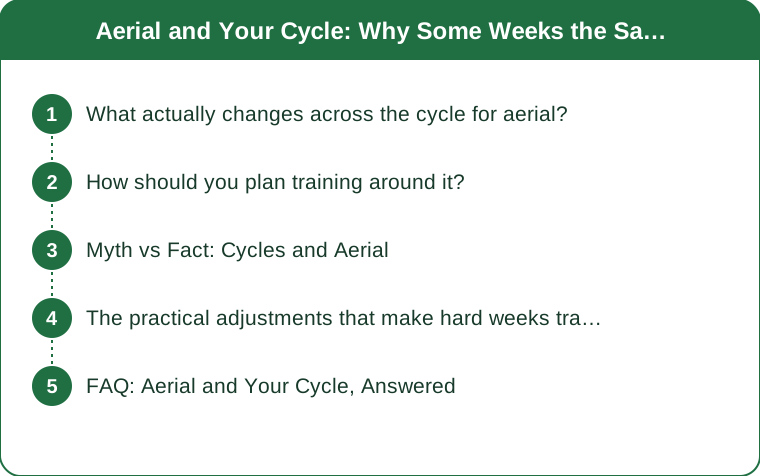
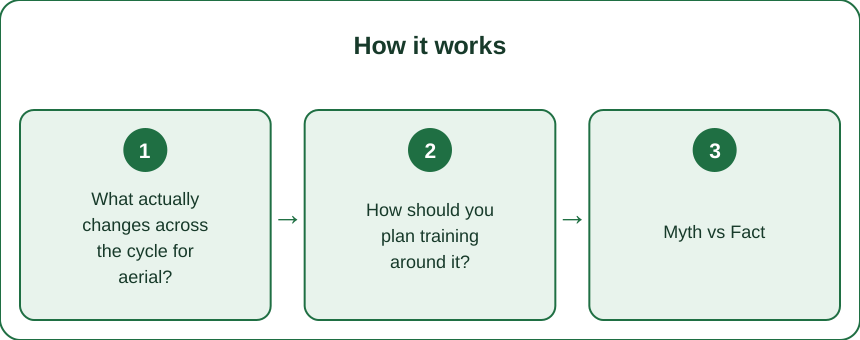
What actually changes across the cycle for aerial?
Perceived exertion swings even when strength does not. Research on strength across the cycle is genuinely mixed, but what athletes consistently report is that the same session feels harder in the late luteal phase. In aerial, where hanging on for one more second is a subjective decision, feeling harder and being harder are close to the same thing.
Ligament laxity peaks around ovulation. Rising estrogen affects connective tissue, and around mid-cycle many people notice a little more range and a little less end-feel. In aerial this cuts two ways - splits and backbends often feel their best, while wraps that rely on a locked position can feel slightly less secure.
Bruising is more visible premenstrually. Fluid retention and vascular changes make the same fabric pressure produce a bigger, more colorful mark. Aerialists notice this constantly and usually assume their technique regressed; more often the tissue is just bruising more readily that week.
Skin sensitivity and pain threshold shift. Fabric burn, hip key pressure, and the classic silks-on-the-back-of-the-knee sensation all read louder in the premenstrual days. The same wrap, the same load, a different report.
Inversions collide with bloating and breast tenderness. Going upside down with a full, tender chest and a bloated abdomen is a genuinely different experience than doing it at day 8, and it is a common reason people quietly skip inversion-heavy classes without connecting the dots.
How should you plan training around it?
The goal is not to train less - it is to put the right kind of training in the right week.
Follicular phase - days roughly 6 to 14 - is your learning window. Perceived exertion is lower, energy tends to be higher, and confidence is better. Put new drops, new wraps, and anything that requires committing to an unfamiliar shape here. This is where skill acquisition is cheapest.
Around ovulation, favor strength and flexibility over high-consequence commitment. Range is often at its best, which is a gift for splits and backbends, but if you are aware of increased laxity, this is not the ideal week to first attempt a drop that depends on a locked wrap holding exactly right.
Luteal phase - post-ovulation - is excellent for conditioning and repertoire. Drilling wraps you already own, building a sequence, doing pull and core conditioning, working on transitions. It requires less novelty tolerance and less pain tolerance than learning something new.
Period week: train what feels good, scale the rest. Many people find their first days actually feel fine or even relieving, particularly for gentler hammock work; others need two days of low-intensity conditioning. Both are normal and both are training.
Track for three cycles before you conclude anything. Note cycle day, how grip felt, how the bruising looked, and one confidence score. Individual patterns vary enormously, and the general rules above matter far less than your own three-month log.

Myth vs Fact: Cycles and Aerial
Myth: You should not invert during your period. Fact: There is no evidence that inverting during menstruation causes harm. The old yoga-derived caution is tradition, not physiology. Comfort is the real variable - if it feels bad, skip it; if it feels fine, it is fine.
Myth: You are weaker during your period, so skip class. Fact: Strength data across the cycle is mixed and the drop many people expect often does not show up in measurement. Perceived effort is the bigger factor, and it usually improves once bleeding starts rather than during the premenstrual days.
Myth: More bruising means your technique got worse. Fact: Sometimes, but premenstrual fluid and vascular changes make identical pressure bruise more visibly. If the placement and technique are unchanged and the bruises got bigger, look at the calendar before you rebuild your wrap.
Myth: Extra flexibility around ovulation is purely a bonus. Fact: It feels wonderful and it is the phase where overreaching into an end range costs the most later. Use it, do not chase a new personal best in it.
Myth: Hormonal contraception makes all of this irrelevant. Fact: It flattens the pattern for many people, which is why some aerialists notice almost no cyclical variation - but the experience varies by method and individual, so track rather than assume.
The practical adjustments that make hard weeks trainable
Layer for pressure, not modesty. Longer leggings, a fitted long sleeve, or a pair of leg warmers over the specific contact points cuts fabric burn and reduces bruising during sensitive weeks. Grippy fabrics can substitute for skin contact in some wraps, though check with your instructor before changing what your wrap relies on.
Move the session earlier. Perceived exertion and heat tolerance both tend to be worse in the late luteal phase, and a hot evening studio compounds it. A cooler morning class often reads as a completely different workout.
Chalk and grip management. Sweatier weeks and slipperier hands are a real premenstrual complaint. Have chalk, a towel, and enough time to actually dry your hands rather than gripping through it.
Extend the warm-up on tender weeks. Ten extra minutes of shoulder and wrist prep reduces how loud the first hangs feel and often changes the entire session.
Give yourself permission to train the floor. Conditioning, flexibility, choreography, and mobility on the ground are legitimate aerial training. A month where two sessions happen at the floor level is not a lost month.
Talk to your instructor. Good coaches program around this routinely and will happily put your new-skill work in the weeks you learn best - but only if they know. This conversation is more normal in aerial studios than most people assume.
Severe pain, unusually heavy bleeding, or symptoms that stop you training regularly are worth a conversation with a healthcare professional rather than a training adjustment.
FAQ: Aerial and Your Cycle, Answered
Is it safe to do aerial inversions during your period?
There is no evidence of harm; the traditional caution comes from yoga convention rather than physiology. Comfort is the deciding factor - bloating and breast tenderness can make inversions genuinely unpleasant in the premenstrual and early period days, and skipping them then is a comfort decision, not a safety one.
Why do I bruise more from aerial some weeks?
Premenstrual fluid retention and vascular changes make identical fabric pressure produce more visible bruising. If your placement and technique have not changed but the marks have, check the calendar before assuming your wrap regressed.
When in my cycle should I learn new aerial skills?
The follicular phase - roughly days 6 to 14 - tends to bring lower perceived exertion and better confidence, which makes it the cheapest window for skill acquisition. Save conditioning, drilling, and repertoire for the late luteal week.
Does grip strength really change across the cycle?
Measured strength changes are modest and the research is mixed, but perceived effort reliably shifts, and in aerial that determines how long you hold on. Sweatier hands premenstrually add a practical grip problem that chalk and a towel largely solve.
TL;DR:
- Perceived exertion, ligament laxity, bruising, skin sensitivity, and inversion comfort all shift across the cycle in ways aerial exposes more than most training.
- Put new drops and skill acquisition in the follicular phase; use the luteal weeks for conditioning, drilling, and repertoire.
- Extra bruising premenstrually is usually vascular, not technical - check the calendar before rebuilding your wrap.
- Inverting during your period is not unsafe; comfort decides it.
- Track cycle day, grip, bruising, and confidence for three cycles - your own pattern beats any general rule.
The fabric is the same every week. You are not - and once the calendar is part of the plan, the impossible weeks stop feeling like regression and start looking like the schedule they always were.
See It in Motion
Seen here: High Waist Bootcut Yoga Pants — shop it on bubblelime.com
Keep Reading
This article is for general informational and styling purposes only. Fit, sizing, and product availability may vary.